
Increasingly, the Selby Foundation is investing in nonprofit technology, considering it a capital resource that can enhance the way organizations serve people, raise funds to provide more mission, and streamline efficiencies.
Examples of recent investments include: $100,000 for new software increasing organizational capacity and aligned operations at All Faiths Food Bank; $13,026 for technology and furnishings for a growing staff team focused on increasing post-secondary attainment and parental involvement in education in DeSoto County; and $11,928 for software supporting learning gains for English Language Learner adults at the Literacy Council of Manatee County.
Just as we encourage students and nonprofits to continue learning, the Selby Foundation staff values every opportunity for education—especially in rapidly evolving areas like technology funding.
In April, our staff and board will hear from Andrew Spector, a Fellow at The Patterson Foundation (TPF) who has been supporting us with nonprofit conversations, funder interviews, and national scans of best practices in technology funding.
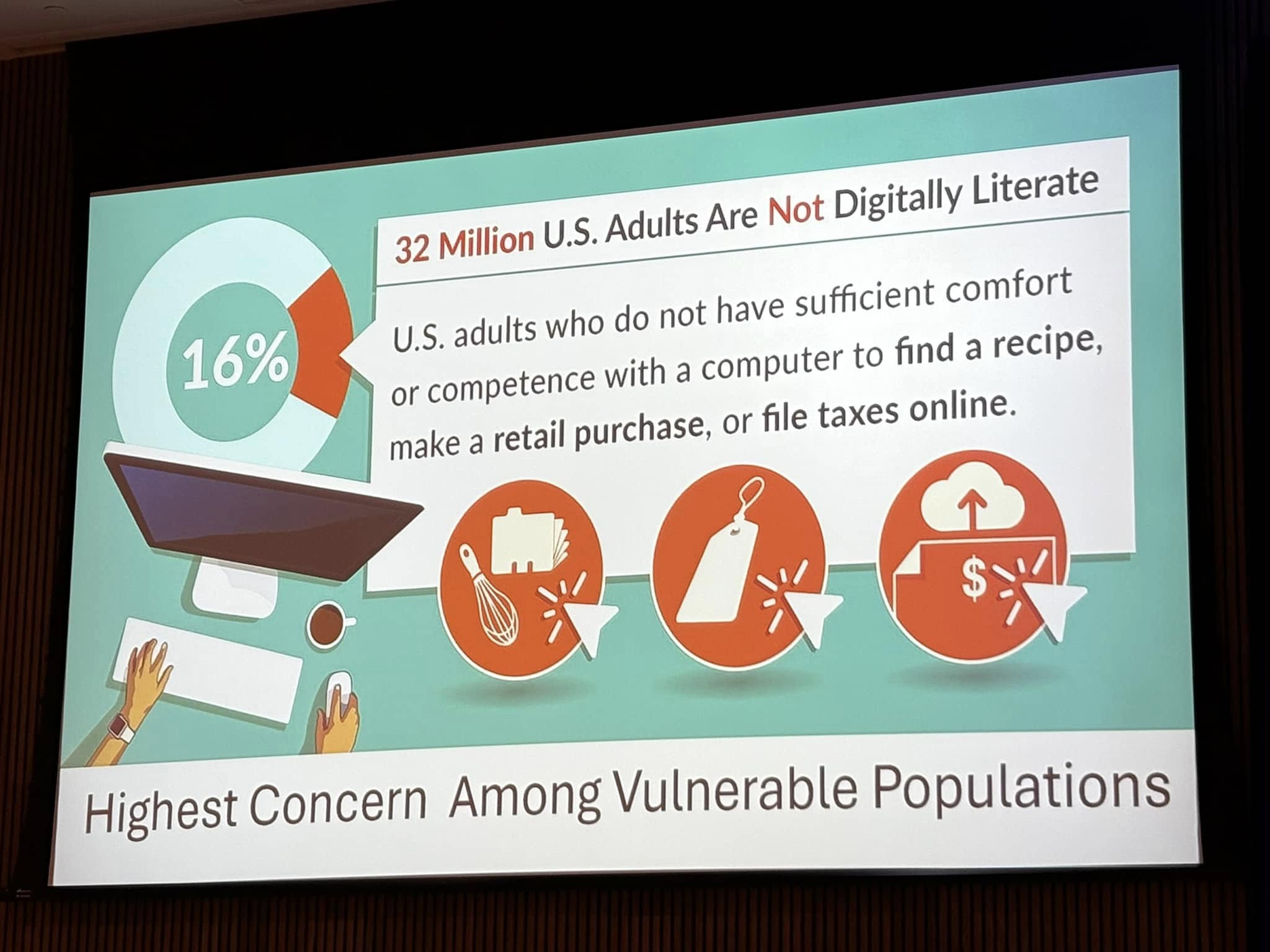
Last week, Grants Manager Elizabeth Power and President/CEO Susie Bowie attended TPF’s Suncoast Connect Symposium, delving into important advancements in digital access. TPF’s work since COVID has encapsulated studies of what it means to have updated devices, connectivity, and skills to use technology effectively.
Here are four takeaways and related questions from the Symposium that either cemented or broadened our understanding of technology funding:
- Rightsizing technology is important to ensure it fits into a nonprofit organization’s culture and business model.
What is the best way organizations can affirm their technology choices before they commit to them and request funds for the new technology? - AI will continue to change workforce needs, build new efficiencies, analyze data about the people nonprofits serve, and help to shape more informed decisions.
What questions do nonprofits need to ask to determine if “off the shelf” AI tools will be the game changers they seek, or if they will benefit from creating their own AI tools requiring development and investments? - Nonprofits will continue to require up-to-date devices and digital tools to ensure their clients’ ability to thrive.
What tools do nonprofits need to help forecast capital expenses required for technology over time—internally by staff and volunteer teams, used in house by clients, or gifted to clients to establish greater equity? Are there additional opportunities for sharing devices and training among organizations or for discounts with group purchases? - Cybersecurity is (or should be) a top concern for anyone using devices—and is an excellent field of study for promising jobs.
What is the best way to share the various careers available in cybersecurity with Selby Scholars and other college students? How can we jointly invest in cybersecurity professionals to evaluate current vulnerabilities and determine opportunities to protect local nonprofits?
We send our gratitude to friends at The Patterson Foundation for such an impactful day in Sarasota to learn, share, connect, and ask the next set of questions for our work. If your nonprofit wants to help us develop our scope of possibilities in technology funding, reach out to EPower@SelbyFdn.org.